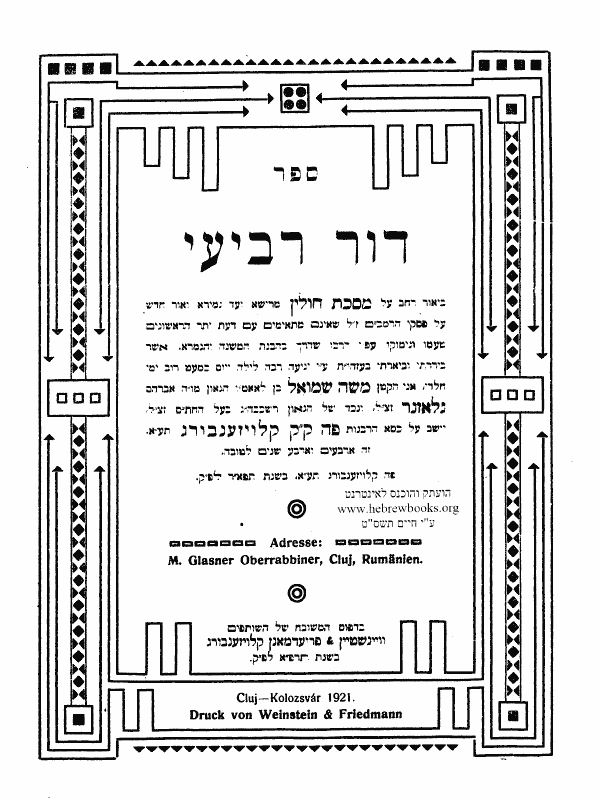
דף ד’ ע”א גמ’ ולאביי קשי’ סיפא אמר לך יוצא ונכנס נמי בא ומצאו קרי לי’, ולרבא קשי’ רישא אמר לך יוצא ונכנס נמי כעע”ג דמי עכ”ל. הא דקאמר לאביי דיוצא ונכנס בא ומצאו קרי לי’ ולרבא קאמר דיוצא ונכנס כעע”ג דמי, היינו משום דודאי יש חילוק בין יוצא ונכנס לבא ומצאו לדינא כמו שמוכח…
Author: David Glasner
I am an economist in the Washington DC area. I also blog about economics at Uneasy Money (www.uneasymoney.com)
עיקר ו’ בדיקת הסכין לשחיטה
The requirement of inspecting the knife of a shohet is not mentioned in any Mishnah or Baraita. On the contrary we learn in a Mishanh (Hullin 15b), one may perform shehitah with any knife other than a harvest sickle or a saw. But if an uninspected knife is considered defective, why did the Mishnah exclude…
עיקר ה’ פסולי שחיטה
The Talmud refers frequently to the five laws of shehitah: shehiyah (pausing), derasah (applying pressure), haladah (passing the knife under skin), hagramah (cutting at a slant), and iqur (tearing). These defects are called “hilkhot shehitah,” because they were transmitted as halakhot le-moshe mi-sinai, as the Gemara explains at the beginning of “Ha-Shohet” However, Rashi notes…
עיקר ד’ שיעור שחיטה בבהמה ובעוף
The Mishnah at the beginning of “Ha-Shohet” (Hullin 27a) teaches that cutting one siman is sufficient for a shehitah performed on a fowl to be valid while cutting both simanim is required for a shehitah performed on a four-legged animal to be valid, and cutting most of a siman is sufficient. הַשּׁוֹחֵט אֶחָד בְּעוֹף וּשְׁנַיִם…
עיקר ג’ שחיטה שאינה ראויה
A (technically) proper, but ineffective, shehitah, in the sense that the shehitah does not render the flesh of the slaughtered animal fit to be eaten, e.g., the shehitah of a tereiphah, is the subject of a dispute between R. Meir and R. Shimon concerning whether such a shehitah is termed a “shehitah,” i.e. whether it…
עיקר ב’ השחיטה מתרת מיד והנחירה אחר יציאת נפשה
The baraita (Hullin 33a) teaches: “One who wishes to eat the flesh of an animal before it expires, may cut a piece from the exposed throat of the animal, and after the animal expires he may eat that piece of flesh.” This baraita teaches us that not only does shehitah prevent an animal from becoming…
עיקר א’ השחיטה והנחירה (part three)
The Rambam’s Explanation of the Dispute between R. Yishmael and R. Akiva Here is the comment of the Ramban on the verse (Deuteronomy 12:21) וזבחת מבקרך ומצאנך אשר נתן לך ה’ א-לוהך כאשר צויתיך The meaning of this verse according to the opinion of the Rabbis is as follows: “As I have commanded thee –…
עיקר א’ השחיטה והנחירה (part two)
The Tosaphists’ Explanation of the Dispute between R. Yishmael and R. Akiva The Tosaphists believe that both R. Yishmael and R. Akiva agree that Scriptural verses regarding shehutei hutz referred only to qodshim. According to the Tosaphists R. Yishmael inferred from these verses that b’sar ta’avah had been prohibited in the desert inasmuch as the…
 Dor Revi'i on the Daf